Municipal & public works
Radios for public works and town crews
Streets, water, parks and the yard cover the whole town, and during a storm they all need the county too. We put each department on its own channel, give the yard a screen that sees every truck, and connect the fleet to the radio system you already share with the county, without carrying a second radio.
Short answer
Can our crews talk to the county radio system?
Yes, with the right bridging equipment. The town’s own channels run on our managed push-to-talk service, and a gateway connects them to the county or regional radio system so a plow driver can be reached from county dispatch during a storm without carrying a second radio. We confirm the specific system and equipment during sales engineering.
The problem
What gets in the way
A town’s radio system is usually old, shared with too many departments, and licensed on frequencies nobody wants to renew. Coverage is fine downtown and poor at the water tower, the transfer station and the far end of the plow routes. Crews end up on personal phones, which are not on the record and do not get answered from a plow cab. During a storm, the county needs to reach the town’s trucks and cannot, and the town has no way to see where its own fleet is.
How we set it up
How the channels are set up
We set up a channel per department: streets and highways, water and sewer, parks and grounds, fleet and the yard, and building inspection or code enforcement if they need one. A town-wide all-call reaches every radio for weather and emergency traffic. Plows, sweepers and dump trucks get vehicle units on truck power; foremen and on-foot crews get rugged handhelds; the DPW office runs the dispatch screen with every vehicle on the map. Where the town needs county interoperability, a gateway bridges the town channels to the county system.
Typical use cases
Where it gets used day to day
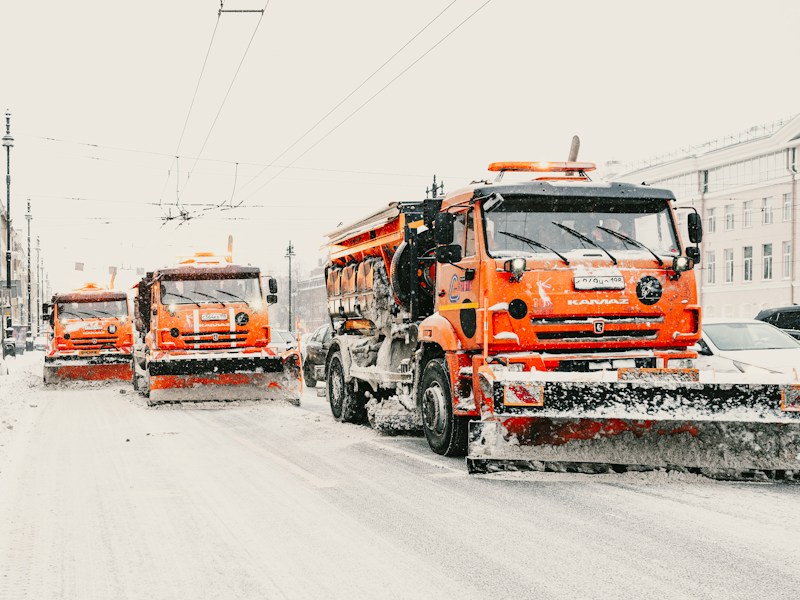
Snow and ice operations with the yard seeing every plow’s position and route progress. Water main breaks with the on-call crew dispatched to the nearest truck. Parks and recreation covering fields, pools and events across town. Leaf and bulk collection coordinated between trucks and the transfer station. Storm response with county dispatch reaching town trucks through the bridge. Building inspectors reaching the office from a site without a phone call.
Recommended solution
What we would recommend
Vehicle units in every truck, rugged handhelds for foremen and on-foot crews, and a dispatch screen at the yard suits most towns: the IR-50 runs on truck power with a hand microphone, the IR-80 touch terminal adds a map and job list for plow supervisors, and the IR-700Y handheld survives the weather. Towns already issuing rugged phones can run the Zello app instead. The county bridge is scoped separately with your emergency management office. Coverage is confirmed across the plow routes and the outlying facilities before we quote.
Questions
Questions public works directors ask us
What towns and districts want to know before replacing the department radios.
Do we lose the ability to talk to the county?
No. A gateway bridges the town's channels to the county or regional system, so county dispatch can reach town trucks during a storm and crews do not carry a second radio. The equipment depends on the county system; we confirm it during sales engineering.
Can the yard see where the plows are?
Yes. Every vehicle unit reports its position to the dispatch screen, with history, so the DPW office can see route progress during a storm and answer residents' calls with facts. See GPS and workforce location.
Is there a per-department budget line rather than one big capital purchase?
Yes. Plans are per radio per month with no minimum and no lock-in, which suits a department operating budget better than a capital radio system. Adding a seasonal crew or a new truck is a monthly change, not a project.
What happens when the cellular network is down in a storm?
Push-to-talk over cellular depends on the networks staying up, and in a severe event that is a real consideration. That is why we recommend keeping the county bridge and, where the town runs one, its conventional system as the fallback rather than replacing it outright. We plan that with you, not around it.
Do we need to renew our FCC licenses?
Not for our radios. They run over the carrier networks, which hold the licenses. If you keep a conventional system for county interoperability, that system's licenses remain the town's responsibility.
Related
A typical town setup
Plows and dump trucks usually take the IR-50, plow supervisors the IR-80 touch terminal, and foremen on foot the IR-700Y. The yard runs the dispatch screen with GPS and workforce location showing every truck during a storm.
The county bridge is built on radio interoperability. For an honest account of how carrier coverage behaves on the outlying routes, read what nationwide coverage actually means.
Get started
Tell us how your team works today
Send us your department list, truck count and the county system you share. We will come back with coverage, hardware, the bridge scope and pricing in one document.