
Transportation and logistics
Radios that keep working once drivers leave the yard
Ordinary radios stop at the gate. Ours keep going, because they run Zello over a multi-carrier cellular SIM. Dispatch stays in touch across every route you run.
Short answer
Do these still work once the truck leaves the yard?
The problem
What gets in the way
A conventional radio system covers the yard and stops at the gate. The moment a driver pulls out, dispatch loses them and falls back to calling a mobile, which means either a driver picking up a phone at the wheel or ignoring it and calling back an hour later. Neither is what you want. The yard still needs its own coordination at the same time: loading, shunting, gate control and shift handover are all radio jobs rather than phone jobs. So most operators run two systems that do not talk to each other, and the office has no idea where anything is between the yard and the delivery point unless a driver volunteers it.
How we set it up
How the channels are set up
We put the whole operation on one Zello network.
A channel covers the fleet, with route or depot channels underneath so a driver on one lane is not listening to another depot all day. Dispatch talks to one driver, a route, or everyone, from a Zello Dispatch Hub seat on the office PC. Because it runs over a multi-carrier SIM, the radio works the same at the loading bay and three states away. Every vehicle shows on a live map, with traffic and breadcrumb history on Plus, which takes the chasing calls out of the day. Photo messages handle proof of delivery and damage reports without a separate app. Drivers get a device with a real push-to-talk button, and rugged phones can be locked down to Zello and the job apps through our device management.
Example channels and calls
What each channel sounds like
Sample traffic, written to show how each channel gets used. Your channel names and groups are set up to match your crew.
Fleet, all driversDispatch and every driver
“All drivers, the bridge on the north route is closed. Take the bypass and add twenty minutes.”
Route 12Drivers on that route and dispatch
“Route 12, the customer moved your 2:30 slot to 4:00. Take the next stop first.”
East depotDepot staff and inbound drivers
“Truck 31 is ten minutes out with a full trailer. Which door do you want it at?”
Yard and loading bayLoaders, shunters and the yard lead
“Door six is loaded and sealed. Shunter can pull it out.”
GateGate staff and the yard lead
“Trailer 418 is at the gate with no appointment. Can you check with dispatch?”
Typical use cases
Where it gets used day to day
Dispatch to driver communication on the road
Yard and loading bay coordination
Gate control and shunting
Checking a driver’s position and the traffic ahead before calling a customer
Proof of delivery and damage reporting by photo
Shift handover across depots
Reaching a whole route at once when a customer moves a slot
The radios
A typical fleet setup
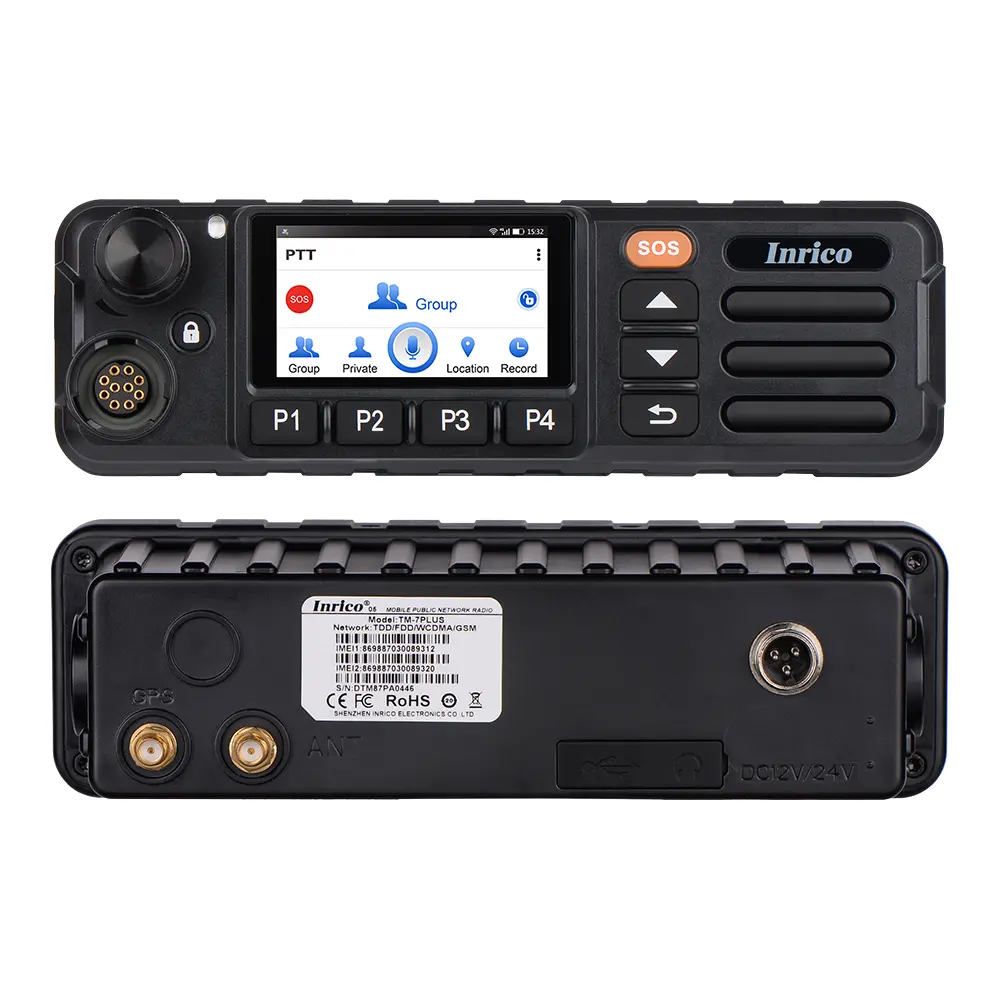
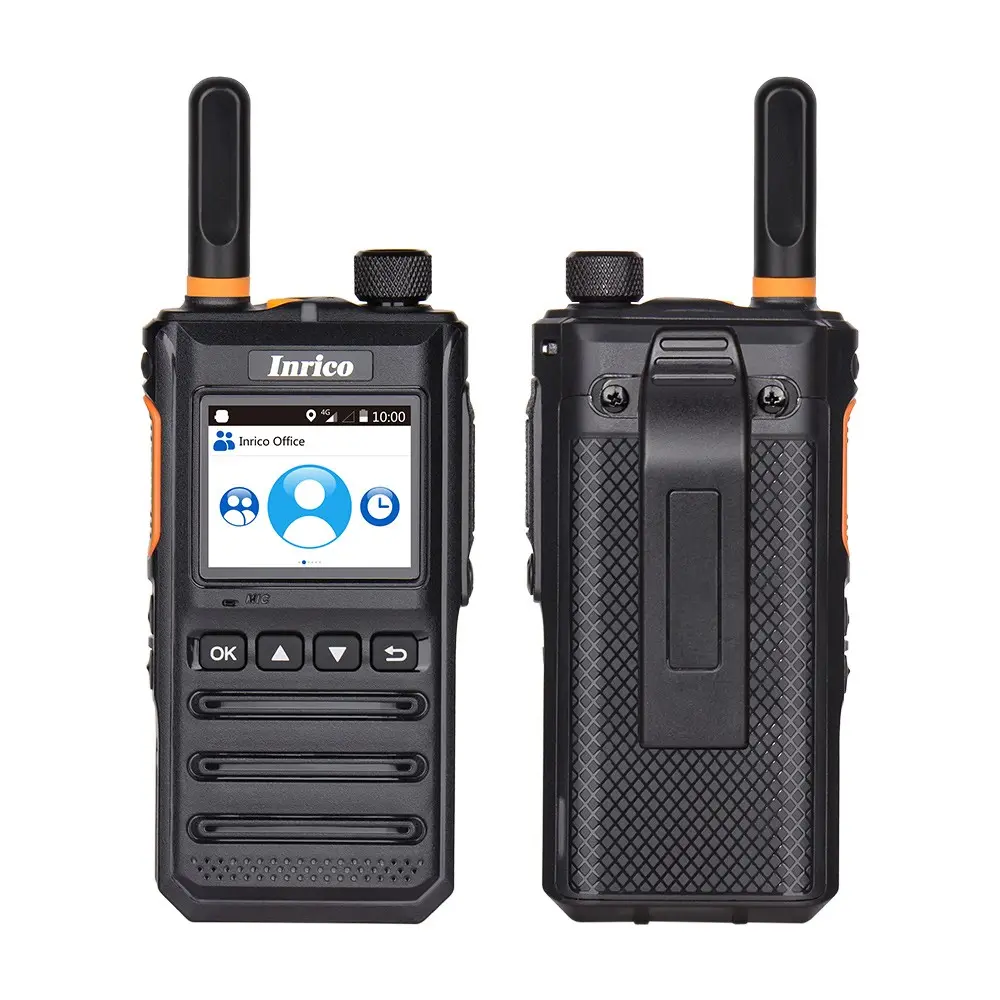
Drivers get the Telox M3 in the cab, running on vehicle power with a palm microphone; fleets that want a louder 20 W speaker, a touchscreen and camera inputs choose the Inrico TM-7Plus. Warehouse and yard staff use the Inrico T640A, and drivers who need delivery apps carry the Sonim XP Pro. Managed Zello Core includes live location for every vehicle; Plus adds breadcrumb history and Google Maps traffic.
Coverage is the question every fleet asks first: what nationwide coverage actually means explains how the three networks differ on the road. If your drivers still miss Nextel Direct Connect, what happened to Nextel covers the modern equivalent.

Vehicle and mobile
Telox M3
A compact dash or console radio with a 5 W speaker and wired network option.
$399.00
Special order · request a quote
Vehicle and mobile
Inrico TM-7Plus
A cab-mounted radio with a touchscreen, a 20 W speaker and camera inputs.
$299.00
Handheld radio
Inrico T640A
A slim everyday radio with a screen. Our lowest-priced handheld.
$199.00

Rugged Android smartphone
Sonim XP Pro
The toughest full-screen phone we supply, with a big PTT button and an SOS key.
$599.00
Recommended solution
What we would recommend
Vehicle two-way radios suit drivers who only need to talk. Drivers who also run delivery apps do better with Zello on a rugged phone, locked down by our MDM. Core covers most fleets; add a Dispatch Hub seat for the office.
Questions
Questions fleet operators ask us
What dispatchers and transport managers check before moving off a yard radio system.
Do these work once the truck leaves the yard?
Yes, and it is the main reason operators move to us. Coverage comes from the cell network, so a driver three states away is on the same channel as the yard. We check your routes against supported coverage before you order.
Is it safe for drivers to use at the wheel?
The devices are built for one-touch, hands-free operation with a dedicated push-to-talk button, which is the point of a radio rather than a phone. You remain responsible for complying with driving law in the states you operate in, and we supply vehicle mounts and hands-free accessories.
Can we see where every vehicle is?
Yes. Real-time location tracking is part of both Managed Zello Core and Plus. Plus adds Google Maps traffic and breadcrumb history of where each vehicle has been. Accuracy depends on the device and the conditions.
Can the yard keep its own channel?
Yes. We normally run a fleet-wide channel with route or depot channels underneath, so yard traffic does not fill the road channel and the other way around.
Can drivers send photos?
Yes. Zello carries photos and text alongside voice, so proof of delivery and damage reports go to the same channel as the conversation, without a separate app.
Related
Related industries

Municipal and public works
Streets, water and parks crews across town, every plow on the yard’s map, and a Zello radio gateway to the county system for storm response.
Read more

Agriculture
Fields, barns and the road to the elevator on one Zello network. Vehicle radios in every cab, nothing to charge, and every machine on a live map at harvest.
Read more

Manufacturing
Production, maintenance and shipping on separate Zello channels across every building, with a Dispatch Hub seat in the control room to reach whoever is closest to a stopped line.
Read more
Get started
Tell us how your team works today
Send us your site list and current radio inventory. We will come back with coverage, hardware and pricing in one document.